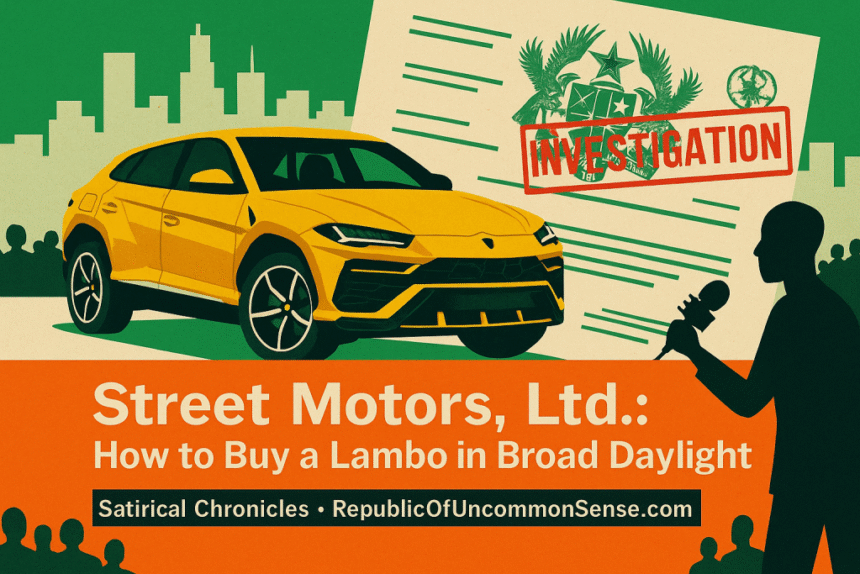
The Shatta Wale Lamborghini Ghana saga has captured the attention of the nation, serving as a reflection of our society’s values and systems. From the bold statement of “buying my Lambo from the streets” to the subsequent investigations by EOCO and U.S. authorities, the entire incident has shed light on the loopholes in our customs, DVLA, and overall culture of shortcuts.
The notion of purchasing a luxury car from informal channels like “Street Motors, Ltd.” may seem amusing, but it also reveals a deeper issue of trust and accountability in our institutions. The lack of proper documentation, warranty, and accountability in such transactions only perpetuates a culture of illegality and shortcuts.
The DVLA, often humorously referred to as the “Department of Very Loose Approvals,” plays a crucial role in legitimizing vehicles on our roads. However, the outdated processes and lack of digitalization make it easy for cars to slip through the cracks without proper verification.
In light of this scandal, it’s essential for buyers to exercise due diligence before making any purchase, especially when it comes to high-value items like cars. A 10-step checklist, including verifying the seller, checking VIN numbers, and maintaining a paper trail, can help ensure a safe and legal transaction.
Moving forward, we need to shift from a vibe economy to a system-based approach. Establishing a real-time VIN registry, implementing port-to-plate tracking, and enhancing collaboration between relevant agencies can help prevent fraud and ensure transparency in vehicle transactions.
The Shatta Wale Lamborghini Ghana satire serves as a wake-up call for us to prioritize integrity and accountability in our dealings. Let’s learn from this incident and work towards building robust systems that uphold the rule of law and safeguard against fraudulent practices. It’s time to pave our streets with working institutions, rather than relying on shortcuts and informal channels for our transactions.
The road to a more transparent and trustworthy society begins with each individual making a conscious effort to uphold ethical standards and demand accountability from our institutions. Let’s not wait for the next scandal to break before taking action. It’s time to drive change and build a better future for Ghana.